The droid that runs renewals & churn watch

Renewals that never sneak up.

A droid that watches every account for the signals that precede a churn: slipping usage, a renewal date creeping up, a support thread left hanging. It scores the risk, drafts the right outreach, and hands a CSM the red accounts with the full story — so renewals are worked weeks early, not the week they lapse.

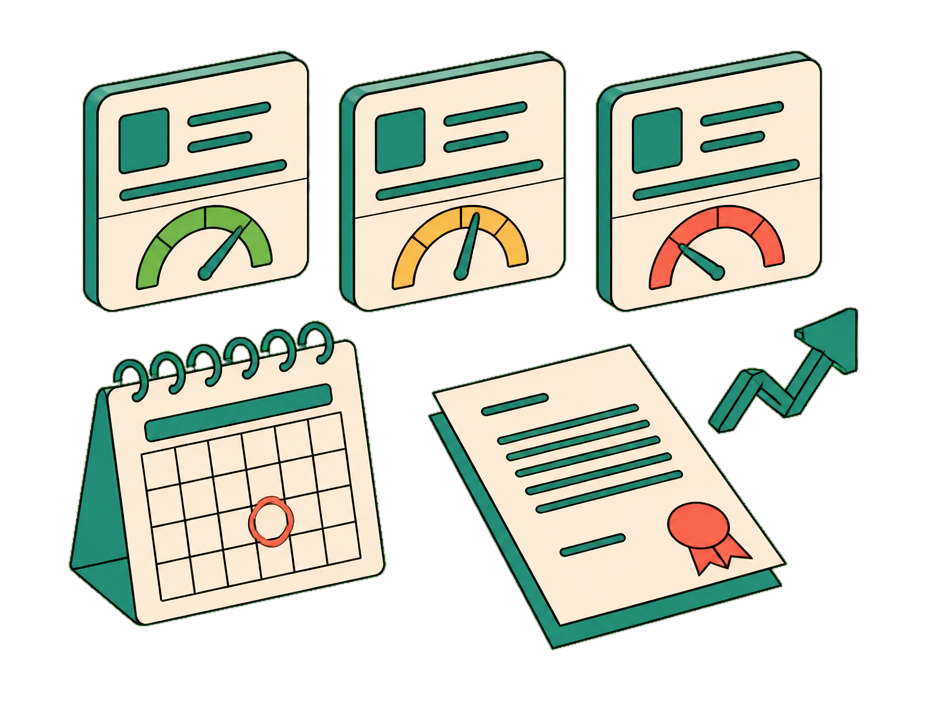
Isometric customer-health scene: account cards with health gauges, a renewal calendar, and a contract with a retention arrow
Does
Scores churn risk, works renewals
Where
B2B SaaS, ~10-person customer team
Reaches people on
Slack, email
Works inside
HubSpot, Stripe
Runs
Daily + ahead of every renewal
01The situation

The accounts most likely to churn are the ones you never hear from.

Renewals had a way of arriving as a surprise. An account would go quiet, usage would slide, and the team would notice the week the contract was up — far too late to do anything but scramble. The accounts most at risk were the ones nobody had heard from, which is exactly why they were invisible.

Health was reviewed once a quarter, in a spreadsheet, by which point the story was already written. What the team needed was a continuous early-warning system — something watching every account every day for the signals that come weeks before a churn, not after.

02How it works

How the droid took it on.

Rather than review health once a quarter, the team handed the watch over. Every morning the droid scores every account, works the amber ones and the upcoming renewals, and hands a CSM the red accounts the moment they turn.

TASK#274Renewal & churn watchstanding
trigger
Every morning at 7:00, a full account health scan
also
Each renewal at 60 days out, plus sudden usage drops
scope
Every active account · usage, billing, activity
runs as
A contained droid action per scan, renewal, or signal
memory
A health history per account, so it sees trends not snapshots

Set up once, in plain language: “watch every account for churn signals, start renewals early, and pull a CSM in the moment one turns red.” The droid turned that into a standing job, the early-warning system a small customer team can't run by hand.

FIG. 1The durable task, exactly as it exists in the runtime.

Every morning trips the same loop:

FIG. 2The loop each run walks.
03Ongoing handling

How it ran, account after account.

Here’s a day of account-watching as it actually unfolded, down to how it reached for each app. Only the one red account ever needed a CSM.

  1. 7:00amscan
    • Stripe
    • HubSpot

    Scored 84 accounts on usage and activity, catching 3 cooling to amber ahead of renewal.

  2. 7:30amrenewal · Initech
    • HubSpot
    • Gmail

    Started a renewal 60 days out with a value recap and a drafted opener.

  3. 10:15amrequest · Hooli
    • Stripe
    • HubSpot

    Prepped a pre-call health snapshot and talking points for a CSM.

  4. 1:20pmsignal · Vandelay
    • Stripe
    • Gmail

    Caught a 40% usage drop with no complaint, then drafted a soft check-in before it became a churn.

  5. 3:00pmred · Starkescalated
    • HubSpot
    • Slack

    Champion left and usage flat near renewal, so it handed the CSM a save play with the full history.

  6. 5:00pmrenewal & risk digest

    The book reconciled: 3 amber worked, 2 renewals started early, 1 red escalated. No renewal left to surprise the team.

FIG. 3One night, run by run.
See it in action

One day, account by account.

The morning scan, the upcoming renewals, and a CSM's question land on the left. Watch the droid pick up each one and work it across billing and the CRM, handing off to a human only for the account that's genuinely at risk.

The result

What changed, by the numbers.

Weeks of warningrisk surfaced while it's still fixable
Renewals earlyworked 60 days out, not the week of
~1 in 9accounts that needed a CSM, with the rest watched quietly
Signals, not vibesusage, tickets and sentiment checked per account

An illustrative workflow built from real product mechanics. The connected apps, the schedules and the run handling are how a droid actually works; the companies, the people and the figures are composites rather than a customer's numbers.

Try this workflow

Run this workflow yourself.

Copy the brief below and paste it into Unify. It’ll walk you through the prerequisites, connect what it needs, and stand the workflow up with you.

Workflow brief
I run customer success at a B2B SaaS company, and renewals keep arriving as a surprise. An account goes quiet, usage slides, and we notice the week the contract's up, which is too late for anything but a scramble. The accounts most at risk are the ones we haven't heard from, which is exactly why they're invisible. We review health once a quarter in a spreadsheet, by which point the story's already written.

Be our churn early-warning system. Apps/channels: HubSpot (accounts, renewal dates, activity, owners), Stripe (usage and billing signals), Gmail (renewal and check-in outreach), Slack #customer (CSM hand-offs and the daily digest).

Run a full account-health scan every morning, start every renewal 60 days out, and react to sudden usage drops. On each scan:
1. Pull usage and billing for every account and cross it with CRM activity, then score each green / amber / red.
2. For amber accounts, draft a low-key check-in for the owner to send.
3. For renewals at 60 days, prep a value recap and draft the renewal opener.
4. Post a renewal-and-risk digest to #customer.

When a CSM asks, give a pre-call health snapshot with talking points. Use judgment on escalation: handle amber and routine renewals yourself, but when an account turns red, whether that's a champion gone or usage flat near renewal, hand it to its CSM with the full history and a suggested save play; don't try to save it with an automated email. Keep a health history per account so you see trends, not snapshots.
Read next

Other jobs handed over

All use cases →

What would you take off your desk?

Tell us the job that never gets done before close. We'll wire it up on a call and you can watch it work.